Nootropics Research: Industrial Grade Compounds for Advanced Cognitive Studies
Nootropics represent one of the most dynamic and rapidly expanding fields in neurochemical research, encompassing compounds that potentially enhance cognitive function, support neurological health, and modulate brain activity. The global market for research-grade nootropic compounds continues to experience exponential growth, driven by increasing recognition of cognitive enhancement’s importance in academic, professional, and military contexts. For research institutions seeking to advance our understanding of cognitive function, access to high-purity, industrial-grade nootropics is not merely beneficial—it’s essential for producing reliable, reproducible results that can withstand scientific scrutiny.1 2
The complexity of cognitive processes demands precision in every aspect of experimental design. From memory formation and attention regulation to executive function and neuroprotection, each cognitive domain involves intricate neural networks and biochemical pathways that researchers must navigate with care. Swissyneu.com provides researchers with the chemical tools necessary to probe these cognitive systems with the accuracy required for modern neuroscientific studies, ensuring that experimental outcomes reflect true biological effects rather than artifacts of impure or inconsistent reagents.3 4
Classification and Mechanisms of Nootropic Compounds
Nootropic compounds can be broadly categorized into several distinct classes based on their chemical structure and primary mechanisms of action. Racetams, including Piracetam, Aniracetam, Oxiracetam, and Pramiracetam, represent the original class of nootropics first synthesized in the 1970s. These compounds share a pyrrolidone nucleus and are thought to enhance cognitive function primarily through modulation of glutamate receptors, particularly AMPA receptors, and enhancement of membrane fluidity in neuronal cells.5 6
Cholinergic compounds constitute another critical category of nootropics, working primarily through the acetylcholine system. This class includes compounds like Alpha GPC (a precursor to acetylcholine), as well as acetylcholinesterase inhibitors that prevent the breakdown of this critical neurotransmitter. Researchers value these compounds for their ability to investigate the cholinergic system’s role in attention, learning, and memory processes.7 8
Ampakines represent a more recently developed class of nootropics that specifically target AMPA-type glutamate receptors, enhancing fast excitatory transmission in the brain. Compounds like CX-516 and CX-717 have shown promise in research for their potential to enhance attention, working memory, and information processing speed without the side effects associated with broader-acting stimulants.9 10
Key Compounds in Contemporary Nootropics Research
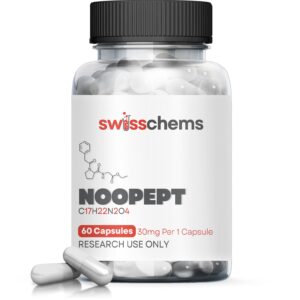
Several nootropic compounds have established themselves as particularly valuable tools across multiple research domains. Noopept, a dipeptide molecule structurally related to the racetam family but significantly more potent, has garnered extensive research interest due to its neuroprotective properties, potential to enhance memory formation, and ability to modulate brain-derived neurotrophic factor (BDNF) expression. Its mechanisms involving both cholinergic and glutamatergic systems make it an indispensable tool for researchers investigating cognitive enhancement.11 12
Coluracetam, a member of the racetam family, has emerged as a particularly valuable compound for research into high-affinity choline uptake (HACU) enhancement. Studies suggest it may improve memory formation by increasing choline availability in neurons, making it especially valuable for research into the cholinergic system’s role in cognitive processes. For researchers investigating attention and learning mechanisms, high-purity Coluracetam provides an essential tool for experimental investigation.13 14
Bromantane, originally developed in Russia, represents a unique class of compounds with both nootropic and anxiolytic properties. Its mechanisms involving dopaminergic system modulation and potential to increase expression of tyrosine hydroxylase and aromatic L-amino acid decarboxylase make it particularly valuable for research into the dopamine system’s role in motivation, focus, and cognitive performance.15 16
9-Methyl-β-carboline (9-Me-BC) has emerged as a compound of particular interest for researchers investigating dopaminergic neurogenesis and cognitive enhancement. Studies suggest it may increase dopamine levels in the prefrontal cortex and potentially stimulate the growth of new dopaminergic neurons, making it invaluable for research into cognitive enhancement and neuroprotection.17 18
Technical Considerations for Nootropics Research
When implementing nootropic compounds in research protocols, several technical factors require careful consideration. Purity standards are paramount, as even minor contaminants can significantly affect cognitive and behavioral outcomes, particularly in sensitive assays measuring subtle changes in performance. Industrial-grade nootropics intended for research should exceed 98% purity, verified through analytical techniques such as HPLC, mass spectrometry, and NMR spectroscopy.19 20
Blood-brain barrier (BBB) permeability represents a critical consideration in nootropics research. Compounds must demonstrate sufficient ability to cross the BBB to exert their effects on central nervous system function. Researchers must verify that their compounds have appropriate physicochemical properties (lipophilicity, molecular weight, and polar surface area) to ensure central nervous system availability, or consider alternative administration routes when necessary.21 22
Dosing precision presents another significant challenge in nootropics research. Due to the potency of many compounds, particularly newer synthetic molecules, small variations in dose can produce significantly different effects. Researchers must employ precision weighing equipment, validated analytical methods, and rigorous dosing protocols to ensure experimental consistency and reproducibility.23 24
Applications in Specialized Research Domains
The versatility of nootropic compounds has led to their application across numerous specialized research domains. In memory research, for instance, compounds like Piracetam, Aniracetam, and Noopept provide valuable tools for investigating the molecular mechanisms underlying memory formation, consolidation, and retrieval. These studies often require sophisticated behavioral paradigms combined with molecular analyses to elucidate the specific cognitive processes affected by each compound.25 26
Attention deficit research represents another rapidly expanding application area for nootropics. Compounds that modulate catecholamine systems (dopamine and norepinephrine) or enhance cholinergic function provide researchers with tools to investigate the neurochemical basis of attention regulation. These studies often employ techniques including electroencephalography (EEG), functional magnetic resonance imaging (fMRI), and sophisticated behavioral tasks to assess attentional performance.27 28
Neuroprotection research has increasingly incorporated nootropic compounds as tools to investigate mechanisms of neuronal preservation and repair. Compounds with antioxidant properties, mitochondrial enhancement capabilities, or ability to modulate neurotrophic factors provide researchers with multiple approaches to study how cognitive function might be preserved in the face of aging, injury, or neurodegenerative processes.29 30
Procurement Strategies for Research Institutions
Sourcing high-quality nootropic compounds for research requires careful evaluation of potential suppliers and comprehensive quality assurance protocols. Research institutions should prioritize vendors who provide complete documentation including certificates of analysis, batch records, stability data, and method validation information. This documentation not only ensures research integrity but also facilitates publication requirements and institutional review board approvals.31 32
For bulk purchasers, establishing direct relationships with manufacturers can provide several advantages beyond cost considerations. These relationships often include access to technical support, custom synthesis capabilities, and priority allocation during supply shortages. However, quality assurance should never be compromised for economic advantages—the most reliable suppliers maintain transparent manufacturing processes and rigorous quality control standards.33 34
International research collaborations introduce additional procurement complexities that must be carefully managed. Regulatory frameworks for nootropic compounds vary significantly between regions, particularly regarding classification and import/export requirements. Suppliers with global distribution capabilities and experience navigating international regulations can significantly streamline these processes, preventing costly interruptions in research timelines.35 36
Emerging Frontiers in Nootropics Research
The field of nootropics research continues to evolve rapidly, with several emerging frontiers showing particular promise. The combination of nootropics with other cognitive enhancement approaches, including transcranial direct current stimulation (tDCS), neurofeedback, and cognitive training, represents an exciting area of investigation. These multimodal approaches may produce synergistic effects that exceed the impact of any single intervention.37 38
Precision nootropics represents another emerging frontier that builds on individual differences in neurochemistry and genetics. By understanding how specific genetic polymorphisms influence responses to various nootropic compounds, researchers aim to develop more targeted approaches to cognitive enhancement. This personalized approach requires extensive research into gene-neurotransmitter interactions, biomarkers of response, and interindividual variability in compound metabolism and activity.39 40
The development of novel nootropic compounds with improved specificity and reduced side effects continues to accelerate. Structure-activity relationship studies, guided by advances in computational chemistry and receptor modeling, have enabled the design of compounds that target specific receptor subtypes or signaling pathways with unprecedented precision. These next-generation compounds may offer researchers more refined tools to investigate the specific neural mechanisms underlying cognitive function.41 42
For educational purposes and research applications, Swissyneu.com provides comprehensive product information and technical specifications for various nootropic research compounds, serving as a valuable resource for researchers seeking reliable cognitive enhancement supplies. Their commitment to quality assurance and technical support makes them an ideal partner for research institutions working with these specialized compounds.43
Showing 1–9 of 10 results